
植物学报 ›› 2025, Vol. 60 ›› Issue (6): 914-930.DOI: 10.11983/CBB24191 cstr: 32102.14.CBB24191
许耘祥1,2, 张莉汶1,2, 王朋1, 顾迎晨1,2, 张标1,2, 朱莹莹1, 刘海伟1,*( )
)
收稿日期:2024-12-09
接受日期:2024-03-18
出版日期:2025-11-10
发布日期:2025-03-18
通讯作者:
*刘海伟, 博士, 副研究员, 硕士生导师, 青年学术带头人。主要从事营养元素迁移转化规律和施肥技术的研究工作。主持中央级公益性科研院所基本科研业务费、山东省自然科学基金面上项目、国家烟草专卖局创新平台经费专项、山东省烟草公司、山东中烟工业有限公司等项目; 参与国家重点研发计划、国家公益性行业(农业)科研专项、国家烟草专卖局重大专项、上海烟草集团、山东中烟及贵州、四川、湖南、江西、山东省烟草公司项目等。以第一或通讯作者在Science of the Total Environment、Chemosphere、Journal of Hazardous Materials及《植物学报》《中国烟草科学》等期刊发表论文30余篇。授权国家发明专利6项(第一完成人)。主编专著3部, 获神农中华农业科技三等奖及中国烟草总公司科技进步二等奖等省部级奖励。E-mail: heaveyliu@163.com
基金资助:
Yunxiang Xu1,2, Liwen Zhang1,2, Peng Wang1, Yingchen Gu1,2, Madan Lal Kolhi1,2, Biao Zhang1,2, Yingying Zhu1, Haiwei Liu1,*()
Received:2024-12-09
Accepted:2024-03-18
Online:2025-11-10
Published:2025-03-18
Contact:
*E-mail: heaveyliu@163.com
摘要: 根内皮层分化的质外体屏障在植物抗逆和养分吸收过程中均发挥重要作用, 其中木栓层发育为近年的研究热点。以烟草(Nicotiana tabacum)栽培品种中烟100为材料, 通过0.1-4.0 mmol∙L-1钾浓度梯度水培实验, 探讨供钾水平对根内皮层木栓化发育的影响及其生理和分子机制。结果表明, 低钾胁迫(0.1 mmol∙L-1)显著增强内皮层木栓化: 完全木栓化区域绝对长度由对照的0-2 cm延长至4-6 cm, 相对占比从0-15.0%提升至33.2%-44.3%, 表明木栓化是烟草响应低钾胁迫的关键形态适应机制之一。表型分析显示, 低钾胁迫下植株根系伸长但生物量下降, 地上部与根系钾离子含量及积累量均减少, 木质部伤流液流量及钾离子运输效率降低。内源激素含量检测发现, 低钾胁迫提高根系内源脱落酸含量, 并降低乙烯和茉莉酸甲酯含量, 形成特异性激素调控网络。转录组数据进一步佐证木栓化发育的分子基础, 木栓质合成与转运相关基因(如CYP86、GPAT和ABCG)及其上游正调控基因MYB36/41/92/93显著上调表达。综上, 该研究阐明了低钾胁迫下烟草通过脱落酸介导的激素信号调控木栓化发育程序, 为解析作物钾胁迫适应机制提供了全新视角。
许耘祥, 张莉汶, 王朋, 顾迎晨, 张标, 朱莹莹, 刘海伟. 不同钾水平下烟草根内皮层木栓化的适应性发育差异. 植物学报, 2025, 60(6): 914-930.
Yunxiang Xu, Liwen Zhang, Peng Wang, Yingchen Gu, Madan Lal Kolhi, Biao Zhang, Yingying Zhu, Haiwei Liu. Differences in the Adaptive Development of Suberin in the Tobacco Root Endothelial Layer under Different Potassium Levels. Chinese Bulletin of Botany, 2025, 60(6): 914-930.
| Reagent | Configuration method |
|---|---|
| 0.01% (w/v) FY 088 | Dissolve 0.01 g of FY 088 powder in 100 mL of distilled water, mix well, and heat to 70°C before using |
| 0.05% (w/v) toluidine Blue O | Dissolve 0.05 g of toluidine blue O powder in 100 mL of distilled water, mix well and store away from light |
| 4% (w/v) agar | Dissolve 4 g of agar powder in 100 mL of distilled water, mix well and heat in a microwave oven over medium heat for 3 min |
| 50% (v/v) glycerol-ethanol | Mix absolute ethanol 1:1 with glycerol well |
表1 烟草根木栓化荧光染色所需试剂配制方法
Table 1 Preparation methods for the reagents required for suberization fluorescence staining of tobacco root
| Reagent | Configuration method |
|---|---|
| 0.01% (w/v) FY 088 | Dissolve 0.01 g of FY 088 powder in 100 mL of distilled water, mix well, and heat to 70°C before using |
| 0.05% (w/v) toluidine Blue O | Dissolve 0.05 g of toluidine blue O powder in 100 mL of distilled water, mix well and store away from light |
| 4% (w/v) agar | Dissolve 4 g of agar powder in 100 mL of distilled water, mix well and heat in a microwave oven over medium heat for 3 min |
| 50% (v/v) glycerol-ethanol | Mix absolute ethanol 1:1 with glycerol well |
| Treatments (mmol∙L-1 K+) | Shoot fresh weight (g) | Root fresh weight (g) | Shoot dry weight (g) | Root dry weight (g) | Root-shoot ratio |
|---|---|---|---|---|---|
| 0.1 | 7.32±0.96 c | 0.70±0.08 b | 0.30±0.04 b | 0.06±0 b | 0.19±0.02 a |
| 0.5 | 10.51±2.25 bc | 0.84±0.08 ab | 0.47±0.09 a | 0.06±0 b | 0.14±0.03 bc |
| 1.0 | 12.33±2.43 b | 0.93±0.07 ab | 0.53±0.10 a | 0.06±0.01 ab | 0.12±0.03 c |
| 2.0 | 13.24±2.51 ab | 1.09±0.41 ab | 0.54±0.13 a | 0.08±0.02 a | 0.16±0.01 b |
| 4.0 | 16.03±2.76 a | 1.03±0.26 a | 0.60±0.10 a | 0.08±0.02 a | 0.14±0.01 bc |
表2 不同浓度钾处理下烟草生物量及根冠比差异
Table 2 Differences in tobacco biomass and the root/shoot ratio under different concentrations of potassium
| Treatments (mmol∙L-1 K+) | Shoot fresh weight (g) | Root fresh weight (g) | Shoot dry weight (g) | Root dry weight (g) | Root-shoot ratio |
|---|---|---|---|---|---|
| 0.1 | 7.32±0.96 c | 0.70±0.08 b | 0.30±0.04 b | 0.06±0 b | 0.19±0.02 a |
| 0.5 | 10.51±2.25 bc | 0.84±0.08 ab | 0.47±0.09 a | 0.06±0 b | 0.14±0.03 bc |
| 1.0 | 12.33±2.43 b | 0.93±0.07 ab | 0.53±0.10 a | 0.06±0.01 ab | 0.12±0.03 c |
| 2.0 | 13.24±2.51 ab | 1.09±0.41 ab | 0.54±0.13 a | 0.08±0.02 a | 0.16±0.01 b |
| 4.0 | 16.03±2.76 a | 1.03±0.26 a | 0.60±0.10 a | 0.08±0.02 a | 0.14±0.01 bc |
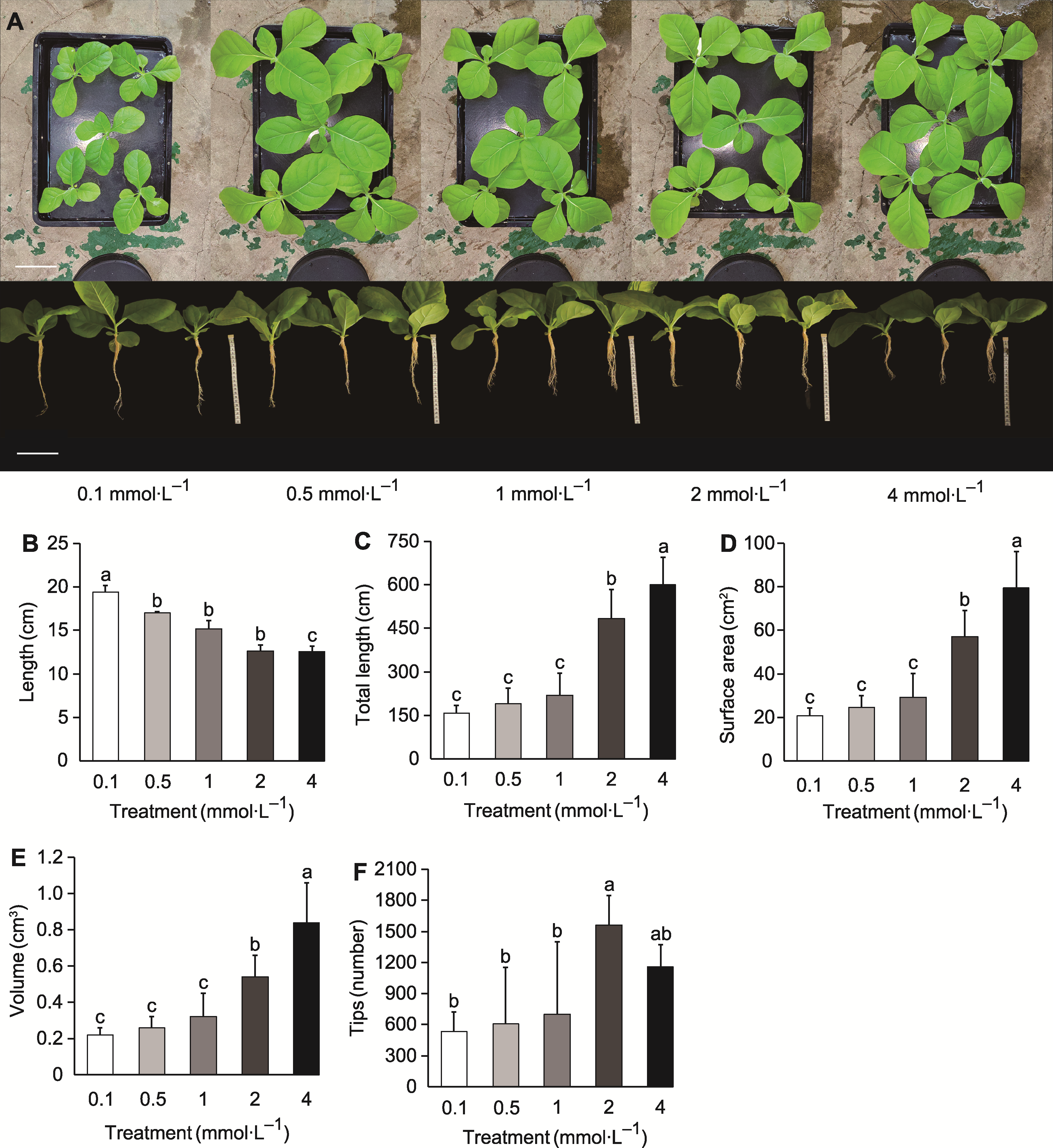
图1 不同浓度钾处理下烟草生长及根系形态发育状况 (A) 处理15天后烟苗根、叶状况(bars=10 cm); (B) 最长根长; (C) 总根长; (D) 根表面积; (E) 根总体积; (F) 根尖数。不同小写字母表示不同处理间差异显著(P<0.05)。
Figure 1 Growth and root morphological development of tobacco plants under different potassium concentrations (A) Root and leaf conditions of tobacco seedlings after 15 days of treatment (bars=10 cm); (B) Length of the longest root; (C) Total root length; (D) Root surface area; (E) Root volume; (F) Number of root tips. Different lowercase letters indicate significant differences among different treatments (P<0.05).
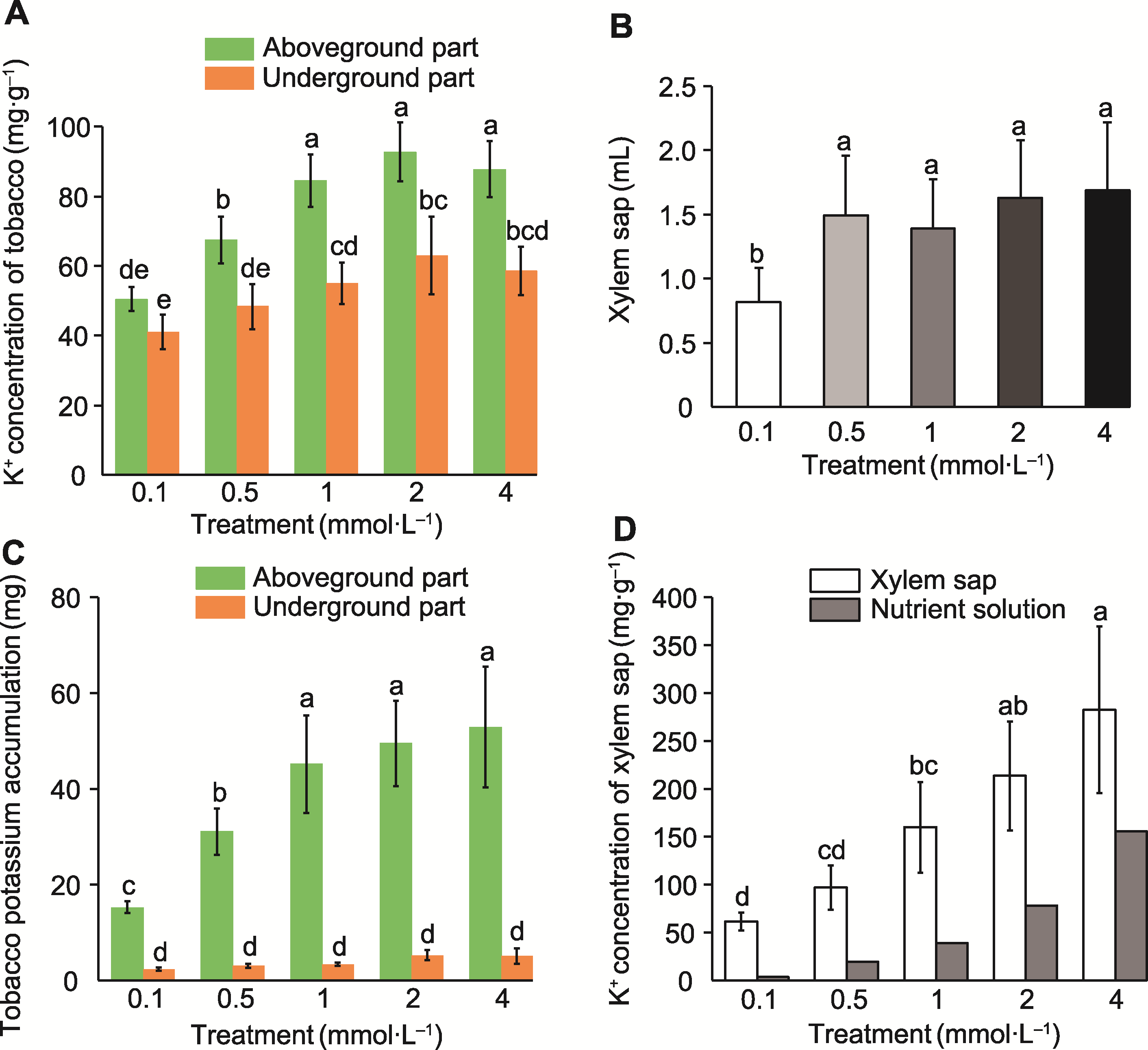
图2 不同浓度钾处理下烟草植株及木质部伤流液的钾浓度 (A) 地上部/地下部钾离子浓度; (B) 木质部伤流液收集量; (C) 地上部/地下部钾素积累量; (D) 木质部伤流液的钾离子浓度。不同小写字母表示不同处理间差异显著(P<0.05)。
Figure 2 Potassium concentration in tobacco plants and xylem sap under different potassium concentration treatments (A) Potassium ion concentrations of the aboveground and underground parts; (B) Xylem sap collection volume; (C) Potassium accumulation in the aboveground and underground parts; (D) Potassium ion concentration in the xylem sap. Different lowercase letters indicate significant differences among different treatments (P<0.05).
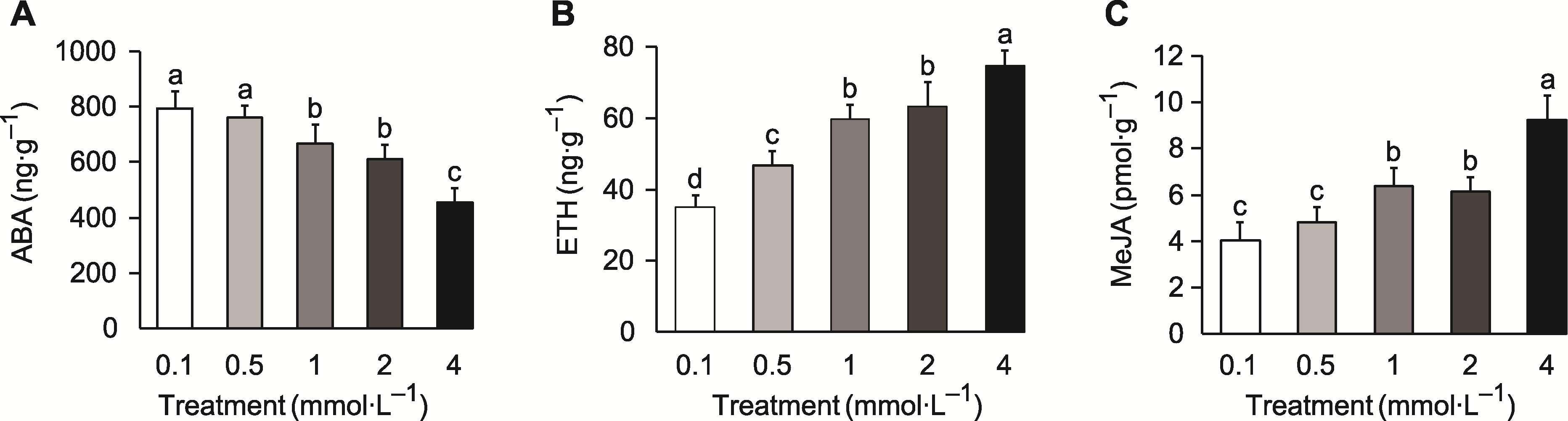
图3 不同钾浓度处理下烟草根系内源激素水平差异 (A) 根系内源脱落酸(ABA)浓度; (B) 根系内源乙烯(ETH)浓度; (C) 根系内源茉莉酸甲酯(MeJA)浓度。不同小写字母表示不同处理间差异显著(P<0.05)。
Figure 3 Differences in the levels of endogenous hormones in tobacco roots under different potassium concentrations (A) Root endogenous abscisic acid (ABA) concentration; (B) Root endogenous ethylene (ETH) concentration; (C) Root endogenous methyl jasmonate (MeJA) concentration. Different lowercase letters indicate significant differences among different treatments (P<0.05).
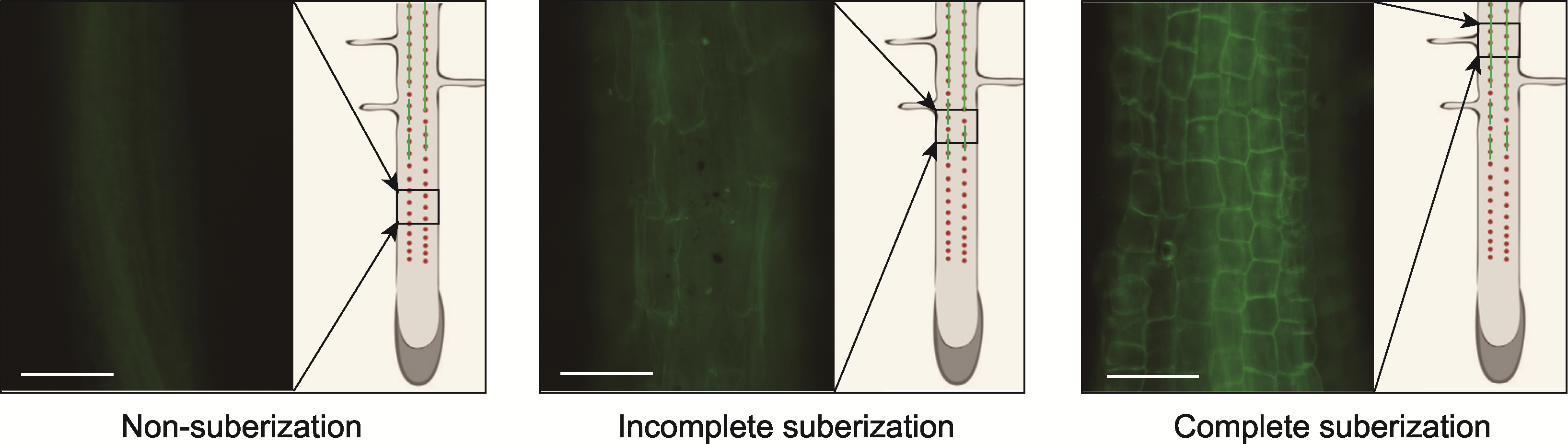
图4 3种木栓化发育时期的荧光成像及示意图 Bars=130 μm
Figure 4 Imaging and schematic diagram of the three types of suberin development stages Bars=130 μm
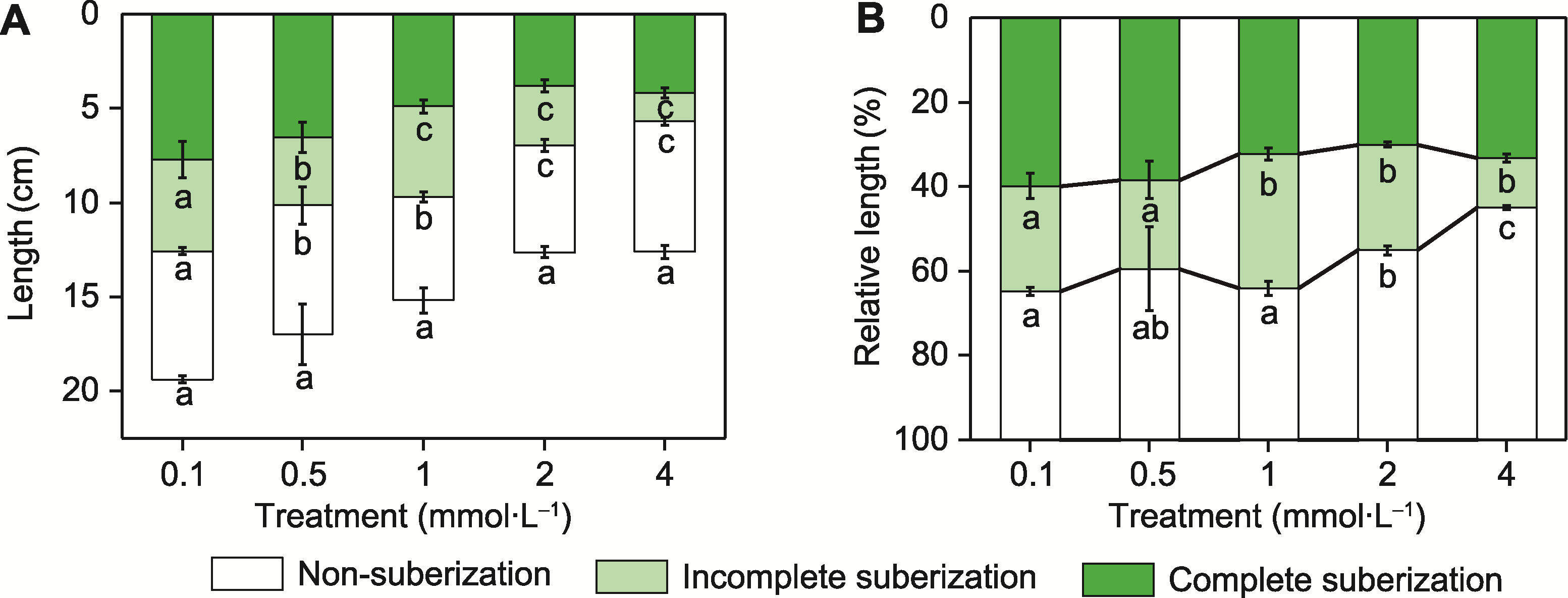
图5 不同浓度钾处理下烟草根内皮层的3种木栓化发育状况 (A) 绝对长度; (B) 相对长度。不同小写字母表示不同处理间差异显著(P<0.05)。
Figure 5 Developmental status of three suberized regions in the endodermis of tobacco roots under different potassium concentration treatments (A) Absolute lengths; (B) Relative lengths. Different lowercase letters indicate significant differences among different treatments (P<0.05).
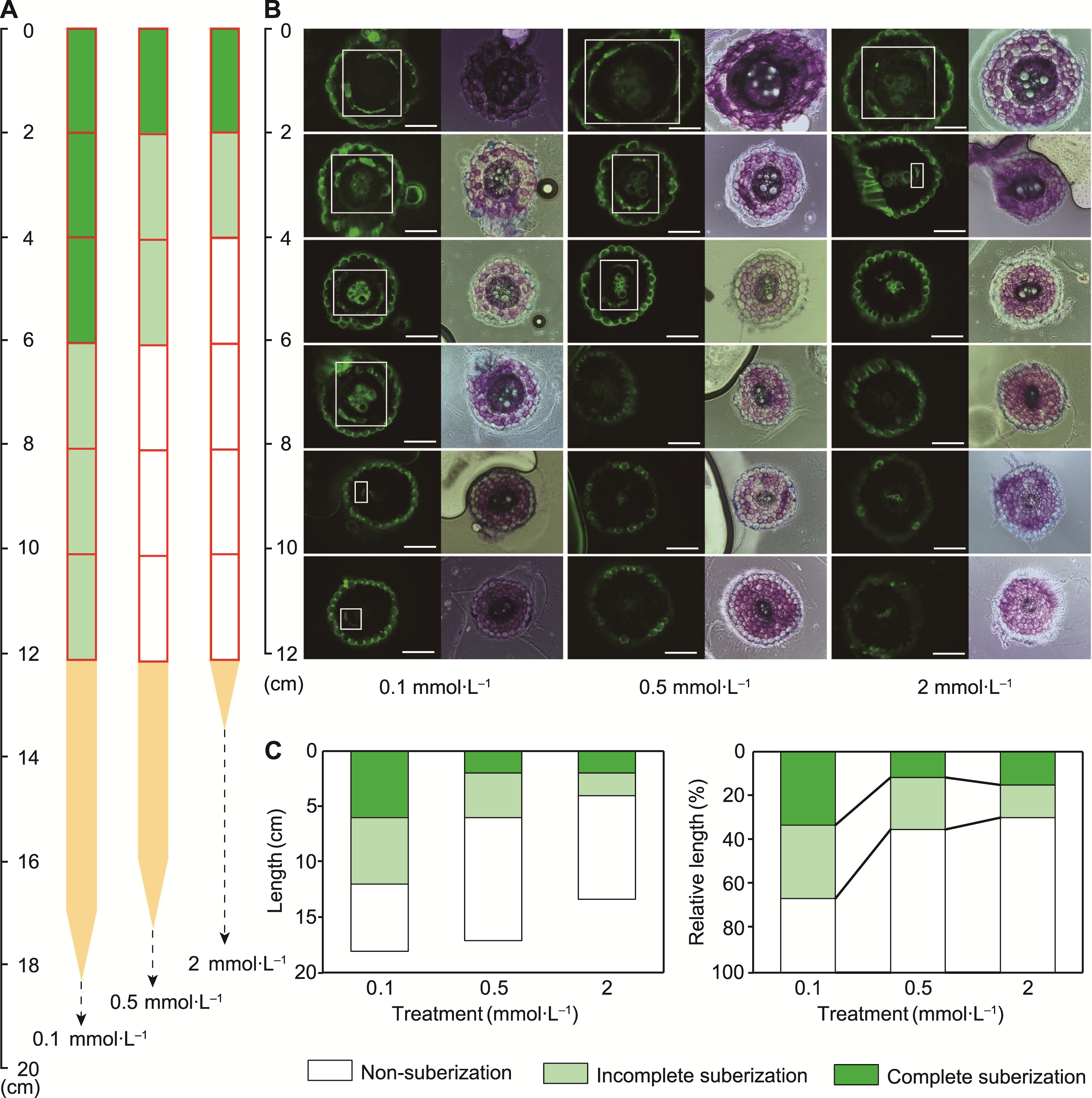
图6 3种浓度钾处理下烟草根内皮层木栓化发育的横切片荧光成像 (A) 3种钾浓度下烟草根内皮层木栓化发育示意图; (B) 3种钾浓度下烟草不同根段横切片的FY 088荧光成像(bars=130 μm); (C) 3种钾浓度下烟草根内皮层木栓化发育的绝对长度和相对长度
Figure 6 Fluorescence images of transverse sections of endodermis development in tobacco roots at three potassium concentrations (A) Schematic diagram of the suberization development in the endodermis of tobacco roots at three potassium concentrations; (B) FY 088 fluorescence imaging of different root segment cross-sections of tobacco at three potassium concentrations (bars=130 μm); (C) Absolute length and relative length of suberization development in the endodermis of tobacco roots at three potassium concentrations
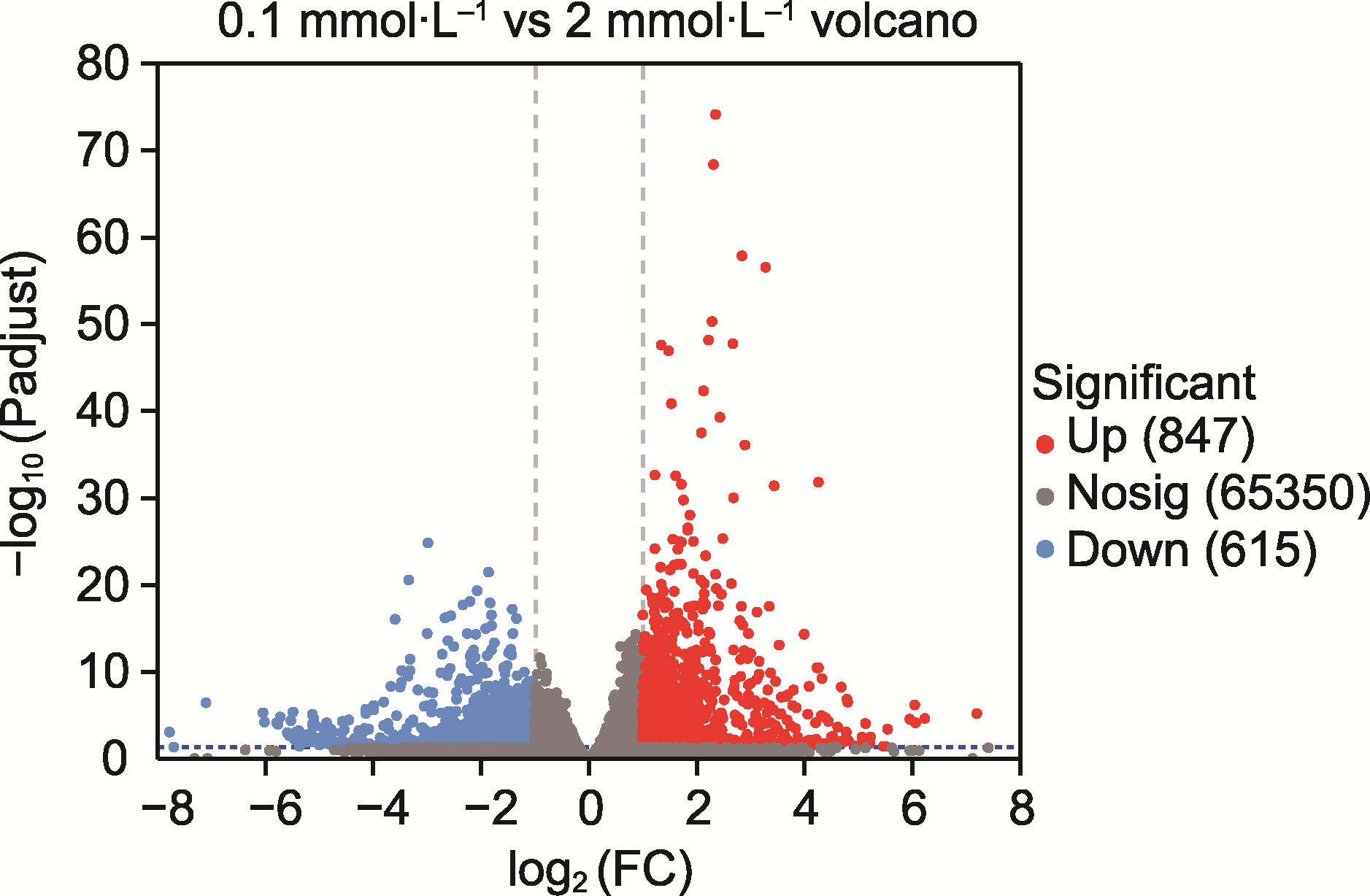
图7 响应0.1 mmol∙L-1 K+处理的差异表达基因数 FC: 差异倍数
Figure 7 Differential expression of genes response to 0.1 mmol∙L-1 K+ treatment FC: Fold change
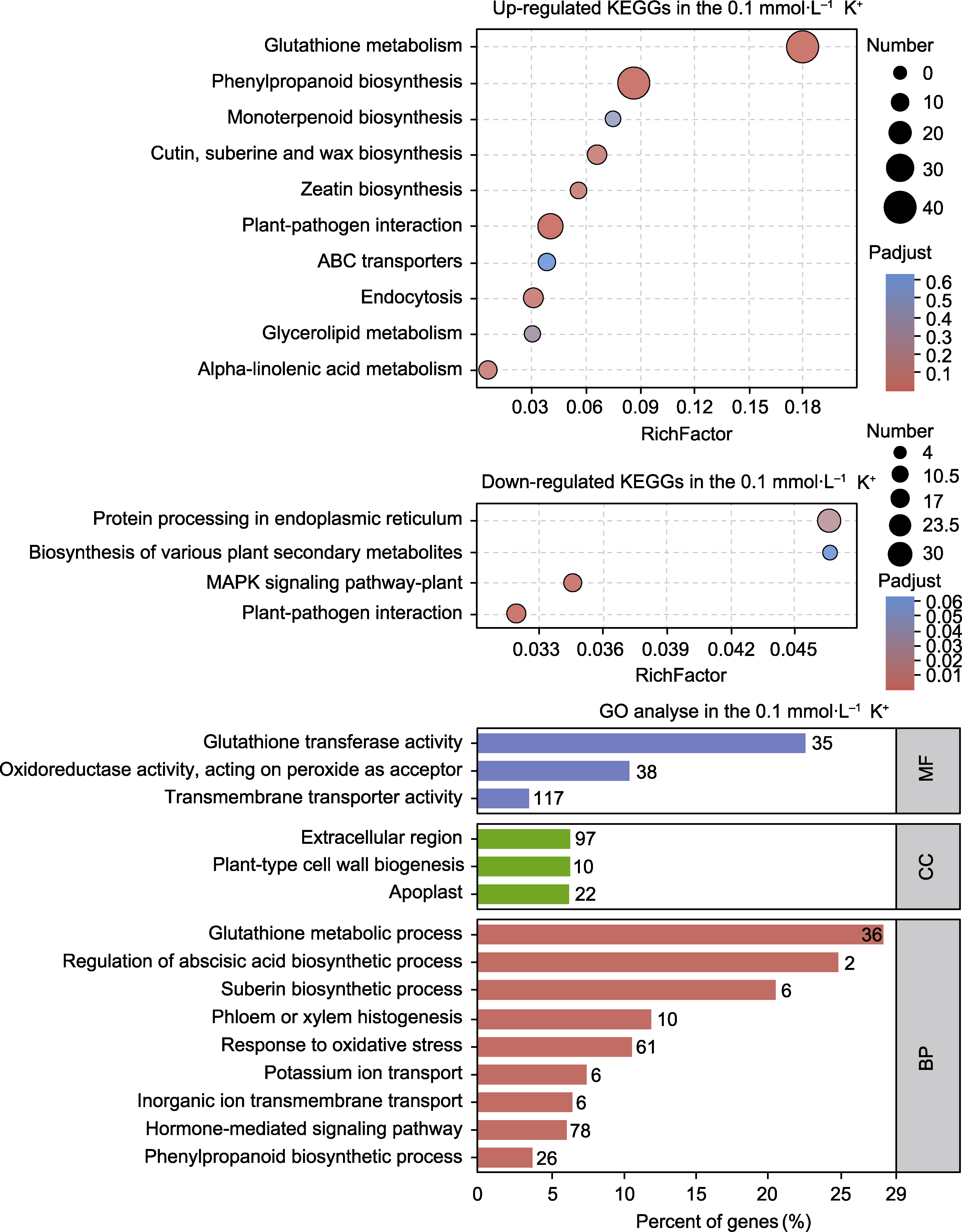
图8 在0.1 mmol∙L-1 K+处理下差异表达基因的KEGG富集分析及GO富集分析 MF: 分子功能; CC: 细胞组分; BP: 生物过程
Figure 8 KEGG and GO enrichment analyses of differentially expressed genes (DEGs) under 0.1 mmol∙L-1 K+ treatment MF: Molecular function; CC: Cellular component; BP: Biological process
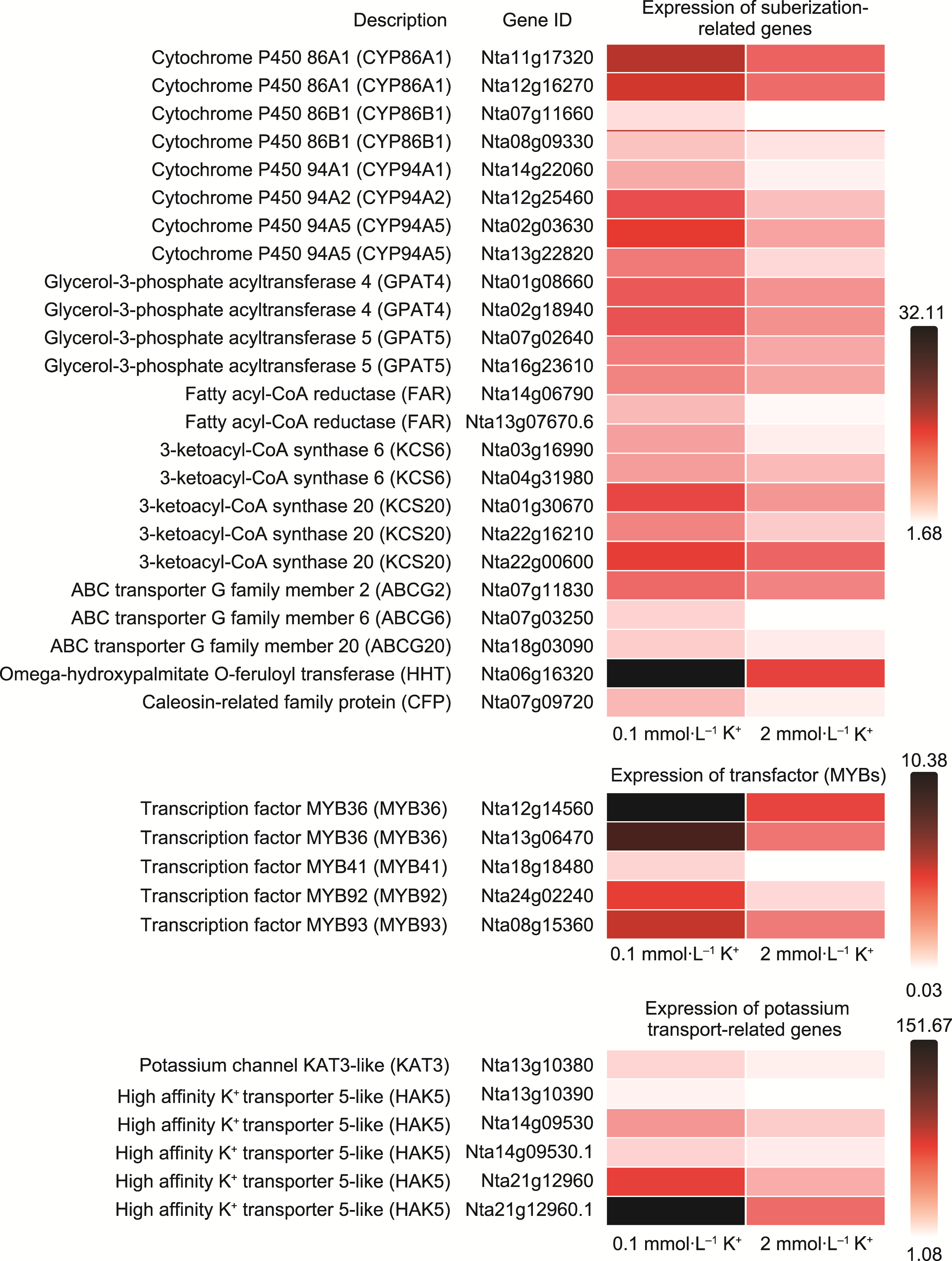
图9 在0.1 mmol∙L-1 K+处理下差异表达基因中内皮层木栓化相关基因、MYB转录因子及钾转运相关基因的表达水平
Figure 9 Expression levels of endodermal suberization-related genes, MYB transcription factors, and potassium transporter-related genes among the differentially expressed genes under 0.1 mmol∙L-1 K+ treatment
| [1] |
Andersen TG, Barberon M, Geldner N (2015). Suberization—the second life of an endodermal cell. Curr Opin Plant Biol 28, 9-15.
DOI PMID |
| [2] |
Barberon M (2017). The endodermis as a checkpoint for nutrients. New Phytol 213, 1604-1610.
DOI PMID |
| [3] |
Barberon M, Vermeer JEM, De Bellis D, Wang P, Naseer S, Andersen TG, Humbel BM, Nawrath C, Takano J, Salt DE, Geldner N (2016). Adaptation of root function by nutrient-induced plasticity of endodermal differentiation. Cell 164, 447-459.
DOI PMID |
| [4] | Baxter I, Hosmani PS, Rus A, Lahner B, Borevitz JO, Muthukumar B, Mickelbart MV, Schreiber L, Franke RB, Salt DE (2009). Root suberin forms an extracellular barrier that affects water relations and mineral nutrition in Arabidopsis. PLoS Genet 5, e1000492. |
| [5] | Chen AL, Liu T, Deng Y, Xiao R, Zhang T, Wang Y, Yang YH, Lakshmanan P, Shi XJ, Zhang FS, Chen XP (2023). Nitrate-dependent suberization regulates cadmium uptake and accumulation in maize. Sci Total Environ 878, 162-848. |
| [6] |
Doblas VG, Geldner N, Barberon M (2017). The endodermis, a tightly controlled barrier for nutrients. Curr Opin Plant Biol 39, 136-143.
DOI PMID |
| [7] | Guo Z, Li ZS, Dai XY, Wang YF (2019). Effects of auxin on tobacco root growth and potassium uptake under low potassium stress. Plant Nutr Fert Sci 25, 1173-1184. (in Chinese) |
| 郭泽, 李子绅, 代晓燕, 王英锋 (2019). 低钾胁迫下外源生长素对烟草根系生长及钾吸收的影响. 植物营养与肥料学报 25, 1173-1184. | |
| [8] |
Leide J, Hildebrandt U, Hartung W, Riederer M, Vogg G (2012). Abscisic acid mediates the formation of a suberized stem scar tissue in tomato fruits. New Phytol 194, 402-415.
DOI PMID |
| [9] |
Liu HW, Zhang Y, Wang HY, Zhang B, He Y, Wang HH, Zhu YY, Holm PE, Shi Y (2023). Comparing cadmium uptake kinetics, xylem translocation, chemical forms, and subcellular distribution of two tobacco (Nicotiana tabacum L.) cultivars. Ecotoxicol Environ Saf 254, 114738.
DOI URL |
| [10] | Liu YK, Lu M, Persson DP, Luo JP, Liang YC, Li TQ (2022). The involvement of nitric oxide and ethylene on the formation of endodermal barriers in response to Cd in hyperaccumulator Sedum alfredii. Environ Pollut 307, 11-9530. |
| [11] |
Liu YK, Tao Q, Li JX, Guo XY, Luo JP, Jupa R, Liang YC, Li TQ (2021). Ethylene-mediated apoplastic barriers development involved in cadmium accumulation in root of hyperaccumulator Sedum alfredii. J Hazard Mater 403, 123729.
DOI URL |
| [12] |
Lulai EC, Suttle JC, Pederson SM (2008). Regulatory involvement of abscisic acid in potato tuber wound-healing. J Exp Bot 59, 1175-1186.
DOI PMID |
| [13] | Luo HB, Huang CM, Cao HQ, Jiang SL, Wu XJ, Ye LP, Wei YW (2022). Effects of different potassium levels on root development and endogenous hormone content for passion fruit tissue cultured seedling. China Fruits (4), 53-58. (in Chinese) |
| 罗海斌, 黄诚梅, 曹辉庆, 蒋胜理, 吴兴剑, 叶丽萍, 魏源文 (2022). 不同浓度钾元素对西番莲组培苗根系生长和内源激素含量的影响. 中国果树 (4), 53-58. | |
| [14] |
Lux A, Morita S, Abe J, Ito K (2005). An improved method for clearing and staining free-hand sections and whole- mount samples. Ann Bot 96, 989-996.
DOI URL |
| [15] |
Melino VJ, Plett DC, Bendre P, Thomsen HC, Zeisler- Diehl VV, Schreiber L, Kronzucker HJ (2021). Nitrogen depletion enhances endodermal suberization without restricting transporter-mediated root NO3- influx. J Plant Physiol 257, 153334.
DOI URL |
| [16] |
Naseer S, Lee Y, Lapierre C, Franke R, Nawrath C, Geldner N (2012). Casparian strip diffusion barrier in Arabidopsis is made of a lignin polymer without suberin. Proc Natl Acad Sci USA 109, 10101-10106.
DOI PMID |
| [17] | Pfister A, Barberon M, Alassimone J, Kalmbach L, Lee Y, Vermeer JE, Yamazaki M, Li GW, Maurel C, Takano J, Kamiya T, Salt DE, Roppolo D, Geldner N (2014). A receptor-like kinase mutant with absent endodermal diffusion barrier displays selective nutrient homeostasis defects. eLife 3, e03115. |
| [18] |
Tao Q, Jupa R, Liu YK, Luo JP, Li JX, Kováč J, Li B, Li QQ, Wu KR, Liang YC, Lux A, Wang CQ, Li TQ (2019). Abscisic acid-mediated modifications of radial apoplastic transport pathway play a key role in cadmium uptake in hyperaccumulator Sedum alfredii. Plant Cell Environ 42, 1425-1440.
DOI |
| [19] |
Tao Q, Li M, Xu Q, Kováč J, Yuan S, Li B, Li QQ, Huang R, Gao XS, Wang CQ (2022). Radial transport difference mediated by root endodermal barriers contributes to differential cadmium accumulation between japonica and indica subspecies of rice (Oryza sativa L.). J Hazard Mater 425, 128008.
DOI URL |
| [20] | Vestenaa MW, Husted S, Minutello F, Persson DP (2024). Endodermal suberin restricts root leakage of cesium: a suitable tracer for potassium. Physiol Plant 176, e14393. |
| [21] |
Wang JB, Zhang QL, Tung J, Zhang X, Liu D, Deng YT, Tian ZD, Chen HL, Wang TT, Yin WX, Li B, Lai ZB, Dinesh-Kumar SP, Baker B, Li F (2024). High-quality assembled and annotated genomes of Nicotiana tabacum and Nicotiana benthamiana reveal chromosome evolution and changes in defense arsenals. Mol Plant 17, 423-437.
DOI URL |
| [22] | Wang LM, Liu YQ, Ruan YJ (2015). The research progress of potassium to plant. Chin Hortic Abstr 31(5), 71, 148. (in Chinese) |
| 王立梅, 刘奕清, 阮玉娟 (2015). 植物钾素研究进展. 中国园艺文摘 31(5), 71, 148. | |
| [23] |
Wang P, Wang CM, Gao L, Cui YN, Yang HL, de Silva NDG, Ma Q, Bao AK, Flowers TJ, Rowland O, Wang SM (2020). Aliphatic suberin confers salt tolerance to Arabidopsis by limiting Na+ influx, K+ efflux and water backflow. Plant Soil 448, 603-620.
DOI |
| [24] |
Wei XP, Liu LY, Jin XY, Xue J, Geng P, Xu ZH, Zhang LH, Wang XY, Zong W, Zhang L, Mao LC (2024a). Exogenous methyl jasmonate promotes wound healing of Chinese yam tubers (Dioscorea opposita) through the deposition of suberin polyaliphatics at the wound sites. Postharvest Biol Technol 207, 112586.
DOI URL |
| [25] |
Wei XP, Liu LY, Liu G, Geng P, Wei XB, Yao X, Chen JY, Gong WJ, Ge ZZ, Liu MP, Mao LC (2024b). Methyl jasmonate promotes suberin biosynthesis by stimulating transcriptional activation of AchMYC2 on AchFHT in wound healing of kiwifruit. Postharvest Biol Technol 210, 112741.
DOI URL |
| [26] |
Wei XP, Liu LY, Xu ZH, Xue J, Geng P, Ge ZZ, Wang XY, Zhang L, Zong W, Mao LC (2023). Methyl jasmonate facilitates wound healing of Chinese yam tubers via positively regulating the biosynthesis and polymerization of suberin polyphenolics. Sci Hortic 312, 111840.
DOI URL |
| [27] |
Xu HM, Liu P, Wang CH, Wu SS, Dong CQ, Lin QY, Sun WR, Huang BB, Xu MZ, Tauqeer A, Wu S (2019). Transcriptional networks regulating suberin and lignin in endodermis link development and ABA response. Plant Physiol 190, 1165-1181.
DOI URL |
| [28] | Yan HF, Shi Y, Li NH, Zhang YC (2013). Progress in tobacco potassium nutrition. J Agric Sci Technol 15, 123-129. (in Chinese) |
| 闫慧峰, 石屹, 李乃会, 张永春 (2013). 烟草钾素营养研究进展. 中国农业科技导报 15, 123-129. | |
| [29] | Yang TZ, Shu HY, Zhao XZ (2002). Recent advances in tobacco potassium nutrition in China. Tob Sci Technol (7), 39-43. (in Chinese) |
| 杨铁钊, 舒海燕, 赵献章 (2002). 我国烟草钾素营养研究现状与进展. 烟草科技 (7), 39-43. | |
| [30] | Zhang B, Wu J, Zhang Y, Dong XW, Han S, Gao X, Du CW, Li HY, Chong XF, Zhu YY, Liu HW (2023). Research progress on physiological functions of suberin lamellae in water and solutes transport. Chin Bull Bot 58, 1008-1018. (in Chinese) |
|
张标, 吴健, 张杨, 董小卫, 韩硕, 高昕, 杜从伍, 李慧英, 种学法, 朱莹莹, 刘海伟 (2023). 木栓层在水和溶质运输中的生理功能研究进展. 植物学报 58, 1008-1018.
DOI |
|
| [31] |
Zhang B, Xu YX, Zhang LW, Yu SY, Zhu YY, Liu CJ, Wang P, Shi Y, Li LZ, Liu HW (2024). Root endodermal suberization induced by nitrate stress regulate apoplastic pathway rather than nitrate uptake in tobacco (Nicotiana tabacum L.). Plant Physiol Biochem 216, 109166.
DOI URL |
| [32] | Zhang B, Xu YX, Zhang LW, Zhu YY, Liu HW (2024). Mechanism of low NO3- stress inhibiting apoplastic transport in tobacco roots. Chin Tob Sci 45(2), 25-34. (in Chinese) |
| 张标, 许耘祥, 张莉汶, 朱莹莹, 刘海伟 (2024). 低NO3-胁迫抑制烟草根系质外体运输的机制研究. 中国烟草科学 45(2), 25-34. | |
| [33] | Zhou Y, An YP, Ma R, Wang P (2024). Transcriptional regulation of suberin and its response to the environment. Acta Bot Boreali-Occident Sin 44, 1993-2006. (in Chinese) |
| 周月, 安永平, 马蓉, 王沛(2024). 木栓质的转录调控及其对环境的响应. 西北植物学报 44, 1993-2006. |
| [1] | 谭驭宇, 邱红静, 张峻浩, 钟一帆, 肖羽含, 金昱何, 王雪菲, 朱静仪, 缪德麟, 黄加琦, 吴馨婷, 郑寨生, 杨梦飞, 查笑君. 外源磺肽素调控茭白分蘖的内源激素和转录组分析[J]. 植物学报, 2026, 61(2): 238-249. |
| [2] | 林淼. 玉米雄穗分枝数的激素“密码”[J]. 植物学报, 2026, 61(1): 157-169. |
| [3] | 王瑞, 赵威军, 白洋, 程庆军, 张海燕, 闫凤霞, 凌亮. 内源激素对高粱主茎与分蘖株高差异的影响[J]. 植物学报, 2025, 60(6): 901-913. |
| [4] | 赵洁, 李静, 李雨欣, 黄奕, 杨杰, 李霞. 活性氧在植物种子休眠释放和萌发中的作用研究进展[J]. 植物学报, 2025, 60(6): 978-992. |
| [5] | 罗号东, 刘勇波. 植物卷须发生及调控机制研究进展[J]. 植物学报, 2025, 60(6): 993-1004. |
| [6] | 李文亮, 冯汉青, 赖建彬. SUMO化修饰在植物与病原互作中的功能研究进展[J]. 植物学报, 2025, 60(5): 749-758. |
| [7] | 刘旭鹏, 王敏, 韩守安, 朱学慧, 王艳蒙, 潘明启, 张雯. 植物器官脱落调控因素及分子机理研究进展[J]. 植物学报, 2025, 60(3): 472-482. |
| [8] | 焦荟颖, 刘立强, 杨佳鑫, 秦伟, 王睿哲. 新疆野苹果自然种群根际固氮菌、解磷菌及解钾菌对叶片养分和生理指标的影响[J]. 植物生态学报, 2024, 48(7): 930-942. |
| [9] | 陈婷欣, 符敏, 李娜, 杨蕾蕾, 李凌飞, 钟春梅. 铁甲秋海棠DNA甲基转移酶全基因组鉴定及表达分析(长英文摘要)[J]. 植物学报, 2024, 59(5): 726-737. |
| [10] | 刘寅笃, 脱军康, 李成举, 张锋, 张春利, 张莹, 王云姣, 范又方, 姚攀锋, 孙超, 刘玉汇, 刘震, 毕真真, 白江平. 耐低钾马铃薯品种的筛选与评价[J]. 植物学报, 2024, 59(1): 75-88. |
| [11] | 宋毅, 陈航航, 崔鑫, 陆志峰, 廖世鹏, 张洋洋, 李小坤, 丛日环, 任涛, 鲁剑巍. 钾营养状况介导的油菜叶片生长及其对叶际微生物的影响[J]. 植物学报, 2024, 59(1): 54-65. |
| [12] | 张悦婧, 桑鹤天, 王涵琦, 石珍珍, 李丽, 王馨, 孙坤, 张继, 冯汉青. 植物对非生物胁迫系统性反应中信号传递的研究进展[J]. 植物学报, 2024, 59(1): 122-133. |
| [13] | 唐子雯, 张冬平. 水稻胚乳淀粉积累过程的分子机理研究进展[J]. 植物学报, 2023, 58(4): 612-621. |
| [14] | 李季蔓, 靳楠, 胥毛刚, 霍举颂, 陈小云, 胡锋, 刘满强. 不同干旱水平下蚯蚓对番茄抗旱能力的影响[J]. 生物多样性, 2022, 30(7): 21488-. |
| [15] | 李月, 胡德升, 谭金芳, 梅浩, 王祎, 李慧, 李芳, 韩燕来. 单列毛壳菌通过促进秸秆降解并调控激素响应基因表达促进玉米生长[J]. 植物学报, 2022, 57(4): 422-433. |
| 阅读次数 | ||||||
|
全文 |
|
|||||
|
摘要 |
|
|||||
 首页
首页