
Chinese Bulletin of Botany ›› 2025, Vol. 60 ›› Issue (6): 1017-1027.DOI: 10.11983/CBB25142 cstr: 32102.14.CBB25142
• TEACHING FORUMS • Previous Articles Next Articles
Dan Mu1,†, Hongjie Long1,†, Jingyi Chen1, Xinyi Hu1, Shitao Fang1, Qi Zhou1, Jiahao Bu1, Yaru Bai1, Yuanrong Zhang1, Yuqi Shang1, Jingnan Shi1, Qianwen He1, Chenyue Bi1, Xinyan Zhang2, Huaguang Qin1, Yuchun Rao2,*( ), Tingzhe Sun1,*()
Received:2025-08-07
Accepted:2025-09-30
Online:2025-11-10
Published:2025-10-22
Contact:
*E-mail: ryc@zjnu.cn;E-mail: confucian007@126.com
About author:First author contact:These authors contributed equally to this paper
Dan Mu, Hongjie Long, Jingyi Chen, Xinyi Hu, Shitao Fang, Qi Zhou, Jiahao Bu, Yaru Bai, Yuanrong Zhang, Yuqi Shang, Jingnan Shi, Qianwen He, Chenyue Bi, Xinyan Zhang, Huaguang Qin, Yuchun Rao, Tingzhe Sun. Exploring a Plant Science Popularization Practice Model Based on “Hands-on + Curriculum Package”[J]. Chinese Bulletin of Botany, 2025, 60(6): 1017-1027.
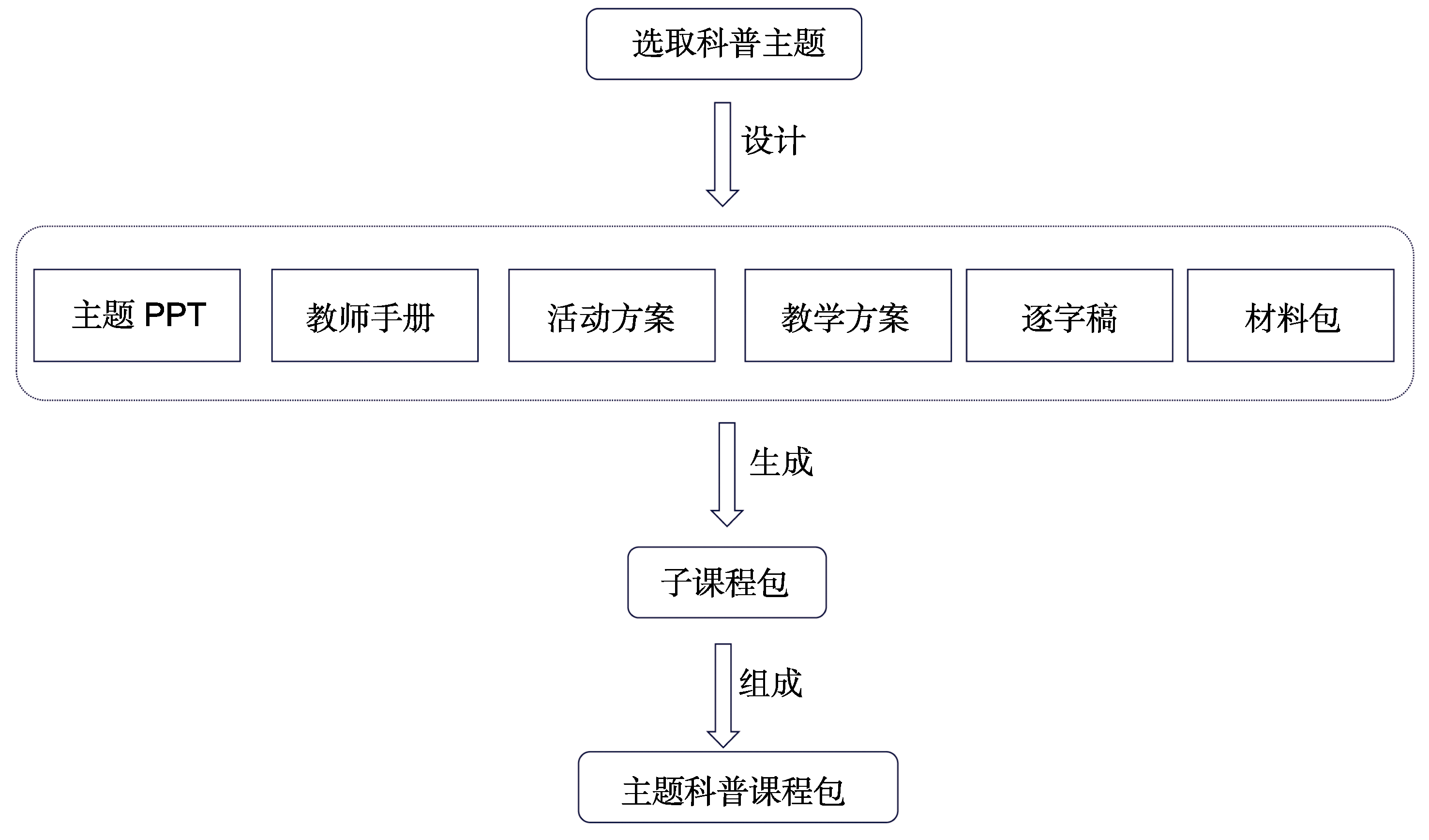
Figure 1 Development pathway of popular science curriculum packages
| 科普主题 | 主题内涵 |
|---|---|
| 非遗工艺 | 聚焦非物质文化遗产工艺, 系统介绍传统工艺与植物载体的结合, 通过对工艺的呈现与解读弘扬传统文化 |
| 标本画作 | 以植物和植物标本为元素进行艺术创作, 旨在引导儿童认识植物形态、结构、功能等基础知识, 同时在创作过程中激发儿童对自然与科学融合的探索欲望 |
| 植趣手作 | 强调将植物素材与日常生活用品相结合, 以儿童自主制作实用性、生活化物品为主要活动形式, 提升儿童审美能力和动手能力 |
| 植萃手作 | 适用于具备一定科学知识和动手能力的高年级儿童, 涵盖更高级的科学原理与技能要求, 促进高年级儿童提升科学探究能力 |
| 植妙实验 | 以植物为实验材料设计开展一系列科学实验, 阐释生活现象背后蕴含的科学原理, 培养儿童的科学思维及观察问题和解决问题的能力 |
Table 1 Classification framework of popular science topics
| 科普主题 | 主题内涵 |
|---|---|
| 非遗工艺 | 聚焦非物质文化遗产工艺, 系统介绍传统工艺与植物载体的结合, 通过对工艺的呈现与解读弘扬传统文化 |
| 标本画作 | 以植物和植物标本为元素进行艺术创作, 旨在引导儿童认识植物形态、结构、功能等基础知识, 同时在创作过程中激发儿童对自然与科学融合的探索欲望 |
| 植趣手作 | 强调将植物素材与日常生活用品相结合, 以儿童自主制作实用性、生活化物品为主要活动形式, 提升儿童审美能力和动手能力 |
| 植萃手作 | 适用于具备一定科学知识和动手能力的高年级儿童, 涵盖更高级的科学原理与技能要求, 促进高年级儿童提升科学探究能力 |
| 植妙实验 | 以植物为实验材料设计开展一系列科学实验, 阐释生活现象背后蕴含的科学原理, 培养儿童的科学思维及观察问题和解决问题的能力 |
| 活动层次 | 层次内涵 | 代表活动 |
|---|---|---|
| 启蒙层(3-6岁) | 以感官探索为核心, 满足儿童在认知发展阶段对具象化学习的需求 | 植物拓印 |
| 发展层(7-9岁) | 侧重原理实践, 在活动过程中培养操作技能, 强化动手能力 | 叶脉书签 |
| 进阶层(10-12岁) | 强调科学原理的应用, 解释生活中常见现象背后的原理, 增加前科学认识, 提升心智技能 | 植物精油 |
Table 2 Levels of handicraft activities
| 活动层次 | 层次内涵 | 代表活动 |
|---|---|---|
| 启蒙层(3-6岁) | 以感官探索为核心, 满足儿童在认知发展阶段对具象化学习的需求 | 植物拓印 |
| 发展层(7-9岁) | 侧重原理实践, 在活动过程中培养操作技能, 强化动手能力 | 叶脉书签 |
| 进阶层(10-12岁) | 强调科学原理的应用, 解释生活中常见现象背后的原理, 增加前科学认识, 提升心智技能 | 植物精油 |
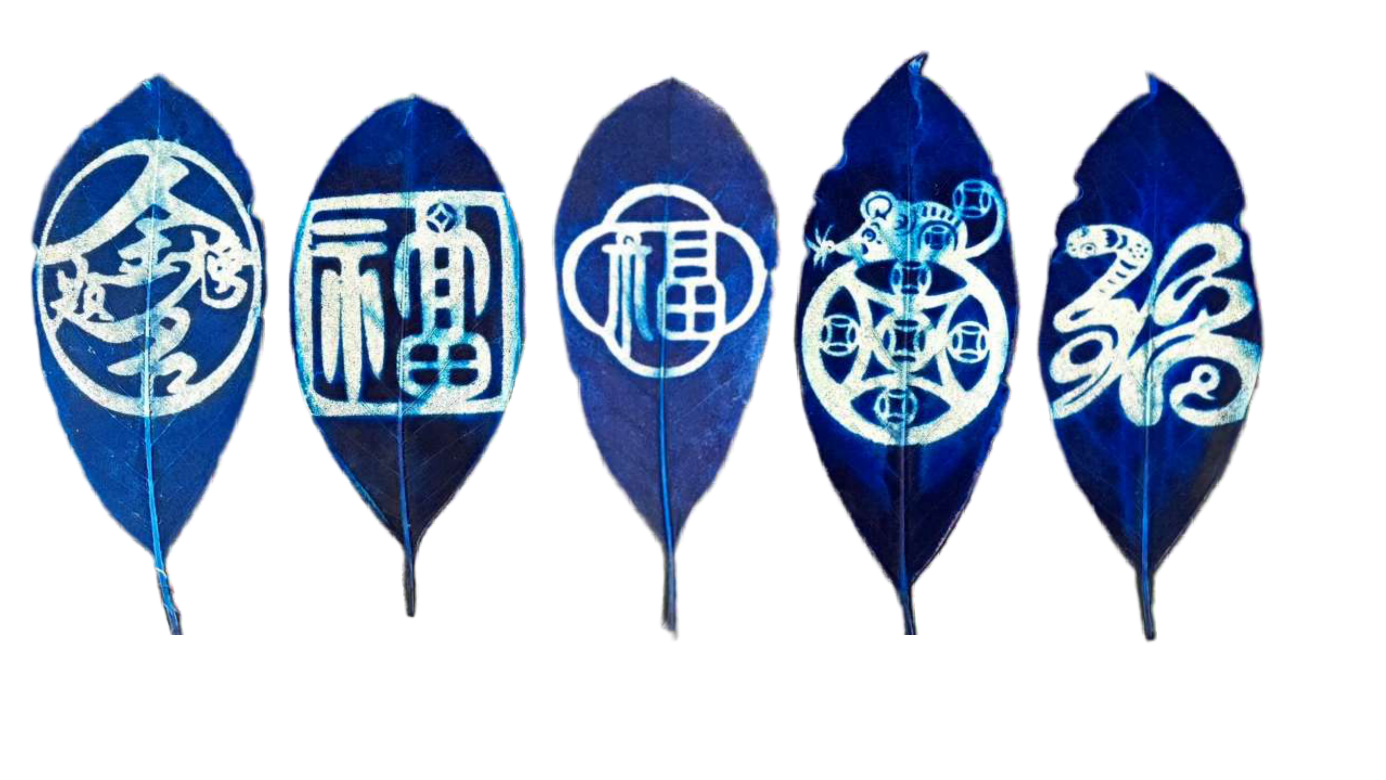
Figure 2 Intangible cultural heritage masterpiece—blueprint leaf-vein painting
| Kolb阶段 | 变量命名 | 本案例做法 | 可替代做法 |
|---|---|---|---|
| 具体体验 | 手作体验(H) | 体验蓝晒叶脉做法 | 体验活动, 动手操作 |
| 反思观察 | 科学反思(R) | 叶脉遇光变蓝色 | 以问题串形式追问, 引发反思 |
| 抽象概念化 | 概念建构(C) | 铁盐光化学反应 | 将个体归纳形成科学抽象概念 |
| 主动实验 | 迁移传播(T) | 制作蓝晒叶脉书签或蓝晒日用品摆件 | 再次验证概念 |
Table 3 Mapping of HRCT learning stages in the blueprint leaf-vein activity
| Kolb阶段 | 变量命名 | 本案例做法 | 可替代做法 |
|---|---|---|---|
| 具体体验 | 手作体验(H) | 体验蓝晒叶脉做法 | 体验活动, 动手操作 |
| 反思观察 | 科学反思(R) | 叶脉遇光变蓝色 | 以问题串形式追问, 引发反思 |
| 抽象概念化 | 概念建构(C) | 铁盐光化学反应 | 将个体归纳形成科学抽象概念 |
| 主动实验 | 迁移传播(T) | 制作蓝晒叶脉书签或蓝晒日用品摆件 | 再次验证概念 |
| [1] |
Amprazis A, Papadopoulou P, Malandrakis G (2021). Plant blindness and children’s recognition of plants as living things: a research in the primary schools context. J Biol Edu 55, 139-154.
DOI URL |
| [2] | Bauerle TL, Park TD (2012). Experiential learning enhances student knowledge retention in the plant sciences. Hort Technol 22, 715-718. |
| [3] | Blikstein P (2013). Digital fabrication and ‘making’ in education:the democratization of invention. In: Walter-Herrmann J, Büching C, eds. FabLab. Beilefeld: Transcript Publishers. pp. 19-32. |
| [4] |
Burke R, Sherwood OL, Clune S, Carroll R, McCabe PF, Kane A, Kacprzyk J (2022). Botanical boom: a new opportunity to promote the public appreciation of botany. Plants People Planet 4, 326-334.
DOI URL |
| [5] | Butler MG, Church KS, Spencer AW (2019). Do, reflect, think, apply: experiential education in accounting. J Account Edu 48, 12-21. |
| [6] | Corbacho-Cuello I, Hernández-Barco M, Muñoz-Losa A (2025). Science and plant interest in outdoor learning: evaluating prospective teachers’ experiences with a botanical inquiry trail. Sci Edu Inter 36, 57-67. |
| [7] |
Dewey J (1893). Self-realization as the moral ideal. Philos Rev 2, 652-664.
DOI URL |
| [8] | Donaldson JL, Franck KL, Baker MA (2020). Challenge to bolster the evidence base for 4-H science, technology, engineering, and mathematics programming. J Ext 58, 1-23. |
| [9] |
Fokides E, Atsikpasi P, Karageorgou D (2020). Tablets, plants, and primary school students: a study. Technol Knowl Learn 25, 621-649.
DOI |
| [10] | Gao HB, Ren L, Hu JP, Li XJ, Huang LL, Cao J (2025). Current situation and characteristics in the development of scientific literacy of Chinese citizens:main findings of the 14th national civic scientific literacy sampling survey. Stud Sci Pop 20, 5-14, 105. (in Chinese) |
| 高宏斌, 任磊, 胡俊平, 李秀菊, 黄乐乐, 曹金(2025). 我国公民科学素质的发展现状与特征——第十四次中国公民科学素质抽样调查报告. 科普研究 20, 5-14, 105. | |
| [11] |
Hall H, Stroud S, Culham A, Clubbe C, Batke S, Medcalf S, Jones MG, Baker L, Lydon S, McGale E, Acedo C, Charmley J, Warren JM, Mitchley J (2025). The botanical university challenge: bridging isolation and empowering plant-aware students. Plants People Planet 7, 906-919.
DOI URL |
| [12] | He QT, Zhang HF (2021). Adventures in blue pigments: cyanotype. Univ Chem 36, 2107107. (in Chinese) |
| 何绮婷, 张皓帆 (2021). 蓝色颜料之蓝晒奇旅. 大学化学 36, 2107107. | |
| [13] | Hu AG, Zhou SJ (2025). Preliminary assessment of economic and social developments during the 14th five-year plan period. J Beijing Univ Technol (Soc Sci Ed) 25(4), 1-24. (in Chinese) |
| 胡鞍钢, 周绍杰 (2025). 中国“十四五”时期经济社会发展初步评估. 北京工业大学学报(社会科学版) 25(4), 1-24. | |
| [14] | Hu XY, Mu D, Zhang HW, Qin HG, Bai YR, Long HJ, Xu YR, Zhang WJ, Deng Y, Zhou Z, Hu JY, Bi CY, Shen ZY, Sun TZ, Rao YC (2024). Exploring biological popularization education in university botany courses. Chin Bull Bot 59, 1054-1062. (in Chinese) |
|
胡心怡, 穆丹, 张惠雯, 秦华光, 白雅茹, 龙洪婕, 徐颖睿, 张雯菁, 邓洋, 周洲, 胡洁怡, 毕晨悦, 沈昭阳, 孙廷哲, 饶玉春 (2024). 基于高校植物学课程的生物科普教育探索. 植物学报 59, 1054-1062.
DOI |
|
| [15] | Hu YN, Xiao XY (2024). Creative labor and embodied practice: the internal logic and value orientation of youth’s immersive experience in handicraft. J Chin Youth Soc Sci 43(3), 57-66. (in Chinese) |
| 胡玉宁, 肖欣耘 (2024). 创意劳动与具身实践: 青年沉浸手作体验的内在逻辑与价值向度. 中国青年社会科学 43(3), 57-66. | |
| [16] |
Hulbert JM, Roets F (2018). Science engagement in South Africa. Science 361, 985.
DOI PMID |
| [17] | Ibrahim HAK, Hindi FAM (2024). The effectiveness of experiential learning strategy in achieving science subject competence among fifth grade elementary school students. Evol Stud Imag Cult 82, 250-261. |
| [18] |
Iriart V, Forrester NJ, Ashman TL, Kuebbing SE (2022). The plant science blogging project: a curriculum to develop student science communication skills. Plants People Planet 4, 485-498.
DOI URL |
| [19] | Jia XL, Wang CC (2024). Research on the transformation efficiency of scientific and technological achievements of ministry-affiliated universities based on network DEA. Int J Glob Econ Manage 2, 35-50. |
| [20] | Kolb AY, Kolb DA (2017). Experiential learning theory as a guide for experiential educators in higher education. Exp Learn Teach High Edu 1, 7-44. |
| [21] |
Kong YT (2021). The role of experiential learning on students’ motivation and classroom engagement. Front Psychol 12, 771272.
DOI URL |
| [22] | Li DM (2018). Causes and countermeasures for the difficulties in the transformation of scientific and technological achievements in universities. China Univ Sci Technol (S1), 114-116. (in Chinese) |
| 李冬梅 (2018). 高校科技成果转化难的成因与对策. 中国高校科技 (S1), 114-116. | |
| [23] | Liou-Mark J, Ghosh-Dastidar U, Samaroo D, Villatoro M (2018). The peer-led team learning leadership program for first year minority science, technology, engineering, and mathematics students. J Peer Learn 11, 65-75. |
| [24] |
McMullan WE, Cahoon A (1979). Integrating abstract conceptualizing with experiential learning. Acad Manage Rev 4, 453-458.
DOI URL |
| [25] |
Meighan LG, Fuhrman NE (2018). Defining effective teaching in environmental education: a Georgia 4-H case study. J Res Tech Careers 2, 36.
DOI URL |
| [26] |
Melis C, Wold PA, Billing AM, Bjørgen K, Moe B (2020). Kindergarten children’s perception about the ecological roles of living organisms. Sustainability 12, 9565.
DOI URL |
| [27] | Metz KE (1997). On the complex relation between cognitive developmental research and children’s science curricula. Rev Edu Res 67, 151-163. |
| [28] | Ouyang H (2008). Why is the conversion rate of scientific research achievements in universities relatively low? Edu Vocation (25), 19. (in Chinese) |
| 欧阳河 (2008). 高校科研成果转化率为何偏低? 教育与职业 (25), 19. | |
| [29] |
Qin HY, Liu ZC, Xie ZP, Lü LX (2025). Handmade effect on marketing. Adv Psychol Sci 33, 362-380. (in Chinese)
DOI |
|
秦环宇, 刘展呈, 谢志鹏, 吕林祥 (2025). 以“手”为攻, 匠心独具: 营销中的手工制作效应. 心理科学进展 33, 362-380.
DOI |
|
| [30] | Ren GQ, Wang MD (2010). An overview of the theory of experiential science and its behavior mechanism. Sci Popul 5, 22-27. (in Chinese) |
| 任广乾, 汪敏达(2010). 体验式科普及其行为机理理论综述. 科普研究 5, 22-27. | |
| [31] | Rezaei A, Zakariaie M (2011). Exploring the impact of handcraft activities on the creativity of female students at the elementary schools. Int Edu Stud 4, 127-133. |
| [32] | Sarkowi S, Wahid AH, Umami S, Astriani SA (2023). Enhancing science knowledge in early childhood through environmental exploration-based learning management. Al-Tanzim J Manajemen Pendidikan Islam 7, 1077-1089. |
| [33] | Sawyer K, Smith B (2024). Communication and engagement for basic science: insights and practical considerations. J Sci Commun 23, Y01. |
| [34] | Wang JY, Feng Y, Liu Q, Zhao SY (2016). A brief analysis of the incentive mechanisms for the transformation of scientific and technological achievements in universities. Technol Innov Appl (24), 87. (in Chinese) |
| 王君宜, 冯源, 刘琦, 赵思缘 (2016). 浅析高校科技成果转化激励机制. 科技创新与应用 (24), 87. | |
| [35] | Whitaker BL, Greenleaf JP (2019). Using course packs to address limitations of traditional textbooks in leadership education. J Leadership Edu 18, 176-184. |
| [36] | Wijnen-Meijer M, Brandhuber T, Schneider A, Berberat PO (2022). Implementing Kolb’s experiential learning cycle by linking real experience, case-based discussion and simulation. J Med Edu Curr Dev 9, 23821205221091511. |
| [37] |
Wu YJ, Goh M, Mai YP (2023). Social innovation and higher education: evolution and future promise. Humanit Soc Sci Commun 10, 283.
DOI |
| [38] | Yaacob A, Mohd AR, Hussain RMR, Ismail SN (2021). Empowering learners’ reflective thinking through collaborative reflective learning. Int J Instr 14, 709-726. |
| [39] | Yang XL (2025). The value and strategy analysis of the integration of intangible cultural heritage inheritance and cultural and creative product design. Packag Eng 46(12), 374-377. (in Chinese) |
| 杨小乐 (2025). 非遗传承与文创产品设计融合的价值与策略研究. 包装工程 46(12), 374-377. | |
| [40] | Yu JG, Shen YW (2023). The ingenious use of low-cost homemade teaching aids in classroom instruction: the case of “recycled plastic bottles in high school thermodynamics instruction”. Phys Teacher 44, 54-56. (in Chinese) |
| 余建刚, 沈艳文 (2023). 低成本自制教具在课堂教学中的妙用——以“废弃塑料瓶在高中热学教学中应用”为例. 物理教师 44, 54-56. | |
| [41] | Zhou RT, Li S (2020). Research on the fusion approach of science popularization for world cultural heritage. Stud Sci Popul 15, 44-52. (in Chinese) |
| 周荣庭, 李爽 (2020). 世界文化遗产科普的融合路径探究. 科普研究 15, 44-52. |
| No related articles found! |
| Viewed | ||||||
|
Full text |
|
|||||
|
Abstract |
|
|||||
 Home
Home