
文冠果种仁不定芽诱导及褐化抑制
收稿日期: 2024-11-23
录用日期: 2025-01-20
网络出版日期: 2025-01-22
基金资助
国家重点研发计划(2022YFD2200402);国家自然科学基金(32071738)
Adventitious Bud Induction and Browning Inhibition of Xanthoceras sorbifolium Seed Kernels
Received date: 2024-11-23
Accepted date: 2025-01-20
Online published: 2025-01-22
以文冠果(Xanthoceras sorbifolium)种仁为实验材料, 筛选诱导不定芽的最佳培养基并探究外植体褐化的影响因素。结果表明, 种仁消毒最佳方法为用75%乙醇消毒30秒, 再用0.1%有效氯消毒10分钟, 污染率为29.33%, 死亡率为12%。不定芽诱导最佳培养基为MS+2.5 mg∙L-1 6-BA+1.0 mg∙L-1 NAA+30 g∙L-1 蔗糖+6.8 g∙L-1琼脂+0.1 g∙L-1肌醇, 诱导率为72.22%; 在不同细胞分裂素类植物生长调节剂中, 添加6-BA时, 外植体死亡率最低, 为12.50%, 诱导率最高, 为73.61%。温度26°C和光照强度19.5 µmol∙m-2∙s-1为最佳培养条件, 诱导率最高, 为72.22%。VI时期(7月1日至8日采种)的种仁饱满坚实, 种皮呈白色, 易剥离, 为抑制文冠果组培褐化的最佳培养材料, 不定芽诱导率最高, 为97.22%。
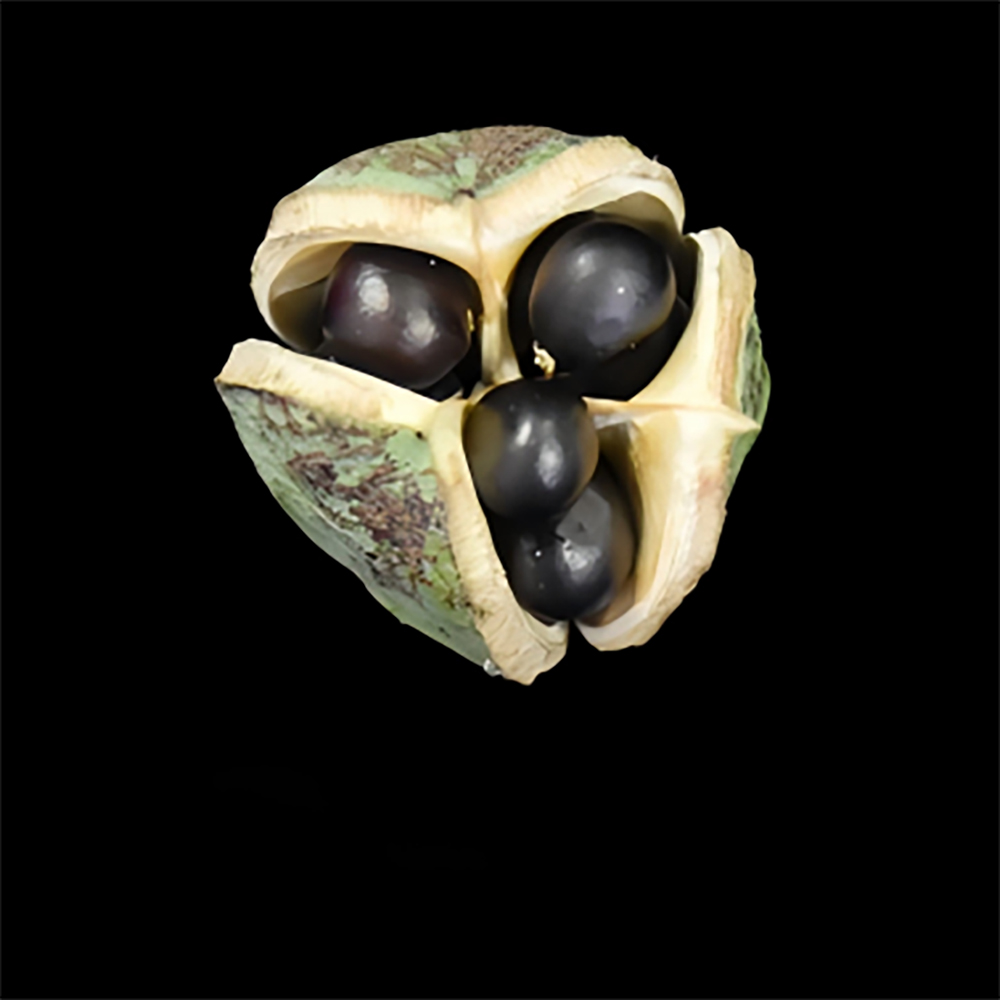
周立茹 , 敖妍 , 仲静 . 文冠果种仁不定芽诱导及褐化抑制[J]. 植物学报, 2025 , 60(6) : 957 -967 . DOI: 10.11983/CBB24176
INTRODUCTION: Plant tissue culture technology is characterized by growth that is not restricted by seasons, high efficiency in plant propagation, and high survival rates. It can effectively ensure the quality and quantity of new and superior varieties of Xanthoceras sorbifolium, and is beneficial for the conservation and rapid dissemination of germplasm resources, thus promoting the development of the Xanthoceras industry. Therefore, it is now urgent to solve the browning problem of explants during the tissue culture process of Xanthoceras, in order to lay the foundation for establishing a stable and efficient regeneration system for this species.
RATIONALE: Currently, the growth cycle of somatic embryogenesis culture in X. sorbifolium is relatively long, and the acquisition of embryogenic callus tissue is quite challenging, resulting in poor reproducibility of the regeneration system established through somatic embryogenesis. Some studies have directly induced adventitious buds via organogenesis in X. sorbifolium and found that when cotyledons and stem segments are used as explants to induce adventitious buds, browning of the explants is common, leading to a low proliferation rate of adventitious buds and affecting the growth of the explants. Therefore, this study focuses on analyzing the difficulties in inducing adventitious buds during the tissue culture process of X. sorbifolium, explores the most suitable growth conditions for inducing adventitious buds, and discusses the impact of factors such as the type of cytokinin, temperature, light intensity, and the tenderness of the explants on the browning of X. sorbifolium tissue culture, in order to provide a basis for establishing an efficient and stable regeneration system for X. sorbifolium.
RESULTS: The browning issue severely affects the growth condition of X. sorbifolium explants and the efficiency of adventitious bud induction. After identifying the optimal disinfection method and the best medium for adventitious bud induction, we investigated the factors affecting the browning of X. sorbifolium cotyledons one by one. We found that the highest induction rate of adventitious buds was achieved when 2.5 mg∙L-1 6-BA was added to the medium, and thus we selected it as the suitable cytokinin for inducing adventitious buds. The cotyledons of X. sorbifolium were cultured under the best conditions of a light intensity of 19.5 µmol∙m-2∙s-1 and a temperature of 26°C. Although culturing in the dark can inhibit browning, it cannot induce adventitious buds. The tenderness of the explants has an important impact on browning; the more tender the explants are, the lower the degree of browning. When the cotyledons of X. sorbifolium harvested from July 1st to July 8th were used for tissue culture, almost no browning occurred. At this time, the fruit coat is not cracked, the cotyledons are plump and firm, the seed coat is white, and it is easy to remove. These cotyledons are the best experimental materials for the tissue culture of X. sorbifolium.
CONCLUSION: Using the cotyledons of X. sorbifolium as the experimental material, the optimal medium for inducing adventitious buds and the factors influencing explant browning were investigated. The results showed that the best disinfection method for cotyledons was to treat them with 75% ethanol for 30 seconds, followed by 0.1% effective chlorine for 10 minutes, resulting in a contamination rate of 29.33% and a mortality rate of 12%. The optimal medium formulation for inducing adventitious buds was MS+2.5 mg∙L-1 6-BA+1.0 mg∙L-1 NAA+30 g∙L-1 sucrose+6.8 g∙L-1 agar+0.1 g∙L-1 myo-inositol, with an induction rate of 72.22%. Among different types of cytokinins, the addition of 6-BA to the medium resulted in the lowest explant mortality rate (12.50%) and the highest induction rate (73.61%). The optimal culture conditions were 19.5 µmol∙m-2∙s-1 light intensity at 26°C, with an induction rate of 72.22%. The cotyledons from VI stage seeds collected between July 1st and July 8th were plump and firm, with white seed coats that were easy to remove, making them the best material for inhibiting browning in Xanthoceras tissue culture, with the highest adventitious bud induction rate (97.22%).
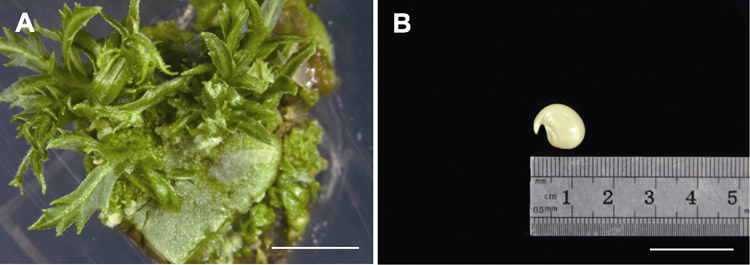
Adventitious bud induction (A) and browning inhibition (B) of Xanthoceras sorbifolium. When establishing a regeneration system for X. sorbifolium through tissue culture methods, severe browning poses a significant challenge. Therefore, through the process of inducing adventitious buds, explant materials that can alleviate the browning of cotyledon tissue culture have been identified. (A) Bar=5 mm; (B) Bar=2 cm
Key words: browning; seed kernels; tissue culture; Xanthoceras sorbifolium
| [1] | 陈彩霞, 黄敏, 赵怡, 曹传取, 王吉升, 史志话, 汪葛峰, 高俊山 (2023). 大花海棠‘比哥’离体快繁再生体系的初步建立. 中国农学通报 39(34), 86-91. |
| [2] | 陈双双, 秦紫艺, 邱帅, 冯景, 高凯, 齐香玉, 陈慧杰, 邓衍明 (2024). 大叶绣球艾薇塔组培快繁技术. 浙江农业科学 65, 1627-1633. |
| [3] | 冯蔚, 李镇刚, 冉瑞法, 肖圣燕 (2018). 不同消毒药剂及激素对桑树冬芽组织培养的影响. 中国蚕业 39(4), 10-13. |
| [4] | 高述民, 马凯, 杜希华, 李凤兰 (2002). 文冠果(Xanthoceras sorbifolia)研究进展. 植物学通报 19, 296-301, 289. |
| [5] | 葛朝红, 李梦喆, 张洪伟, 闵卓, 蕾晓鹏, 刘旭, 李伟明 (2023). 文冠果种质资源种仁主要营养成分检测及相关分析. 特产研究 45(3), 30-37. |
| [6] | 黄敏敏, 李贵花 (2022). 中国文冠果植物化学成分及药理作用研究进展. 山东化工 51(4), 86-88, 91. |
| [7] | 黄卫丽, 刘平生, 赵颖 (2019). 文冠果组培中抑制嫩茎褐化措施的研究. 内蒙古林业科技 45(4), 53-55. |
| [8] | 姬媛媛 (2021). 文冠果的组织培养技术研究. 硕士论文. 呼和浩特: 内蒙古农业大学. pp. 1-43. |
| [9] | 李凯泉, 陕林康, 丁立军 (2024). 响应面优化文冠果油基生物柴油制备工艺. 山东工业技术 (2), 3-11. |
| [10] | 李晓玲, 丛娟, 于晓明, 董英山 (2008). 植物体细胞无性系变异研究进展. 植物学报 25, 121-128. |
| [11] | 刘文诗 (2023).‘沃柑’组培再生体系及遗传转化体系的建立. 硕士论文. 雅安: 四川农业大学. pp. 1-41. |
| [12] | 陆璐, 吴丹, 王磊, 王震, 张鑫洋, 徐海涛, 解孝满, 赵永军 (2024). 5个文冠果新品种的选育. 中国果树 (1), 118-121. |
| [13] | 强淑君, 靳磊 (2024). 北方地区不同种质文冠果观赏性综合评价. 农业灾害研究 14(3), 67-69. |
| [14] | 秦宇 (2012). 红豆杉组织培养体系建立与优化. 硕士论文. 长沙: 湖南农业大学. pp. 1-47. |
| [15] | 檀苏红, 邓少宁, 程梦叶, 刘博威, 张驰, 李双, 朱陈宇, 耿晶晶, 王文江 (2024). 柿砧木优系L938离体快繁技术建立. 果树学报 41, 1875-1884. |
| [16] | 王蓓 (2024). 文冠果生态特性与营林措施探究. 中国林业产业 (3), 40-42. |
| [17] | 王媚, 赵慧, 王淼, 刘智强 (2023). 文冠果活性成分与药理作用的研究进展. 园艺与种苗 43(9), 39-41. |
| [18] | 王瑞, 陈永忠, 王湘南, 彭邵锋, 陈隆升, 马力, 罗健, 杨小胡 (2015). 油茶组培苗高效增殖体系的建立. 中南林业科技大学学报 35(10), 40-43. |
| [19] | 王姗, 付复兴, 鲍华鹏, 马星宇 (2024). 木兰科植物组织培养技术研究进展. 安徽农业科学 52(5), 11-13, 27. |
| [20] | 王永明, 赵静茹, 陈颖 (1986). 文冠果的组织培养. 植物生理学通讯 (1), 42. |
| [21] | 韦凤娟, 廖克波, 杨梅, 戴勤, 俞建妹, 梁机, 梁晓春 (2011). 擎天树组培外植体消毒与褐化抑制的研究. 中国农学通报 27(31), 18-22. |
| [22] | 杨越 (2019). 文冠果育种研究现状与展望. 林业与生态科学 34, 363-368. |
| [23] | 苑福林 (2020). 文冠果扦插和组织培养技术研究. 硕士论文. 泰安: 山东农业大学. pp. 1-46. |
| [24] | 臧国忠, 陈尚武, 张文, 马会勤 (2008). 文冠果子叶同步胚的高效诱导及植株再生. 西北林学院学报 (5), 91-94. |
| [25] | 张东, 薛雅琳, 段章群, 李秀娟, 朱琳, 何少卿 (2017). 文冠果油脂肪酸、甘油三酯组成及其相关性分析研究. 中国油脂 42(2), 26-29. |
| [26] | 张桂琴, 徐祥龄, 赵志学 (1980). 文冠果嫩茎组织诱导植株移栽初获成功. 林业科技通讯 (7), 4-5. |
| [27] | 赵美, 刘一玮, 石翔天, 李亚俐, 申树林, 尹能文, 赵会彦, 傅鹰, 曲存民 (2024). 以甘蓝下胚轴为外植体的再生体系优化. 作物学报 50, 2408-2414. |
| [28] | 周颖怡, 王景飞, 钟建立, 李栋梁 (2024). 茶树组织培养技术与应用研究进展. 分子植物育种 22, 4733-4746. |
| [29] | Ashraf MA, Nan Q (2022). Evolutionarily conserved shoot- borne root developmental circuit. Mol Plant 15, 783. |
| [30] | Bian Z, Wang XL, Lu JK, Wang DL, Zhou YY, Liu YS, Wang SK, Yu ZQ, Xu DP, Meng S (2022). The yellowhorn AGL transcription factor gene XsAGL22 contributes to ABA biosynthesis and drought tolerance in poplar. Tree Physiol 42, 1296-1309. |
| [31] | Cortleven A, Leuendorf JE, Frank M, Pezzetta D, Bolt S, Schmülling T (2019). Cytokinin action in response to abiotic and biotic stresses in plants. Plant Cell Environ 42, 998-1018. |
| [32] | Liang Q, Li HY, Li SK, Yuan FL, Sun JF, Duan QC, Li QY, Zhang R, Sang YL, Wang N, Hou XW, Yang KQ, Liu JN, Yang L (2019). The genome assembly and annotation of yellowhorn (Xanthoceras sorbifolium Bunge). GigaScience 8, giz071. |
| [33] | Long Y, Yang Y, Pan GT, Shen YO (2022). New insights into tissue culture plant-regeneration mechanisms. Front Plant Sci 13, 926752. |
| [34] | Omary M, Gil-Yarom N, Yahav C, Steiner E, Hendelman A, Efroni I (2022). A conserved superlocus regulates above- and belowground root initiation. Science 375, eabf4368. |
| [35] | Shi TL, Ma HY, Wang XR, Liu H, Yan XM, Tian XC, Li ZC, Bao YT, Chen ZY, Zhao SW, Xiang QH, Jia KH, Nie S, Guan WB, Mao JF (2024). Differential gene expression and potential regulatory network of fatty acid biosynthesis during fruit and leaf development in yellowhorn (Xanthoceras sorbifolium), an oil-producing tree with significant deployment values. Front Plant Sci 14, 1297817. |
| [36] | Su YH, Liu YB, Zhang XS (2011). Auxin-cytokinin interaction regulates meristem development. Mol Plant 4, 616-625. |
| [37] | Yang XM, Wang Y, Yang YW, Shareng T, Xing YK, Bai GW, Xing ZY, Ji YY, Liu LL, Cao GX (2024). Genome- wide characterization and development of simple sequence repeat markers for molecular diversity analyses in yellowhorn (Xanthoceras sorbifolium Bunge). Plants 13, 2794. |
| [38] | Zhao YX, Luo YL, Chen YX, Ao Y (2024). Integration of miRNA and ARF gene analysis provides a reference for the pistil abortion mechanism in Xanthoceras sorbifolium. Ind Crops Prod 212, 118289. |
/
| 〈 |
|
〉 |

 首页
首页