高温胁迫影响玉米生长发育的分子机制研究进展
Research Progress on Molecular Mechanisms of Heat Stress Affecting the Growth and Development of Maize
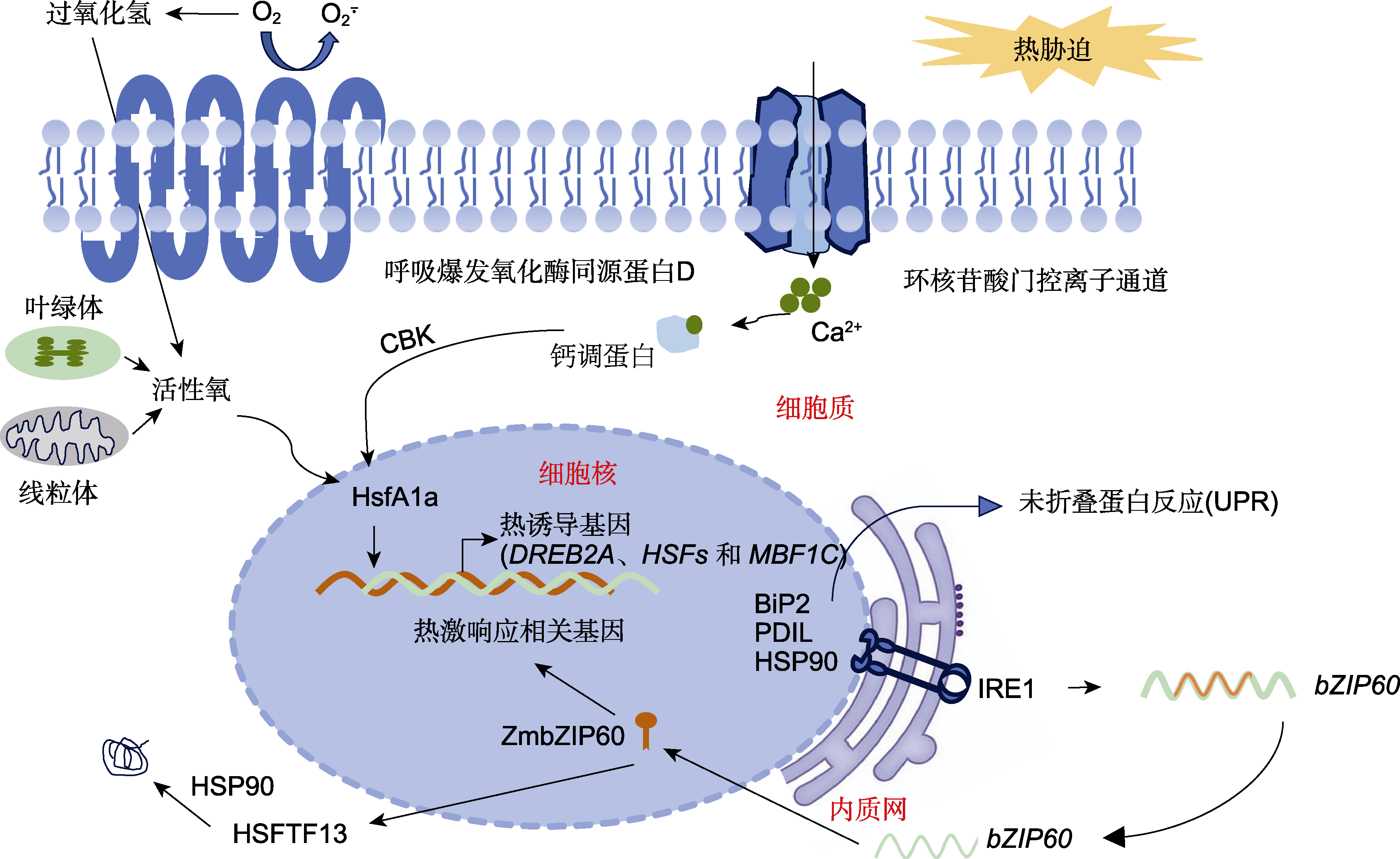
当植物暴露于高温胁迫下, 其细胞膜受损伤, 质外体Ca2+释放, 导致叶绿体和线粒体功能丧失, 细胞质内Ca2+和活性氧(ROS)水平升高, 以及错误折叠或未折叠蛋白质过度积累。细胞质内Ca2+和ROS增加并作为第二信使刺激下游调控网络。高温胁迫破坏蛋白质稳态, 诱导未折叠蛋白反应(UPR)以及由IRE1-ZmZIP60介导的信号通路。ZmZIP60激活A型热激转录因子(HSFs)和HSFTF13的表达, 后者上调热激蛋白(HSP)基因(如HSP90)的表达。
Heat stress damages cell membranes when plants are exposed to heat stress leading to the release of apoplastic Ca2+. This disruption results in the dysfunction of chloroplast and mitochondrial, causing increased levels of both Ca2+ and reactive oxygen species (ROS) in the cytoplasm, alone with an excessive accumulation of misfolded or unfolded proteins. The increased Ca2+ and ROS serve as secondary messengers, stimulating downstream regulatory networks. Heat stress disrupts protein homeostasis, prompting the activation of the unfolded protein response (UPR) and signaling pathways mediated by IRE1-ZmZIP60. ZmZIP60, in turn, activates the expression of type-A heat shock transcription factors (HSFs) and HSFTF13, which subsequently upregulates the expression of heat shock protein (HSP) genes (such as HSP90).